
FINDING THE 5%: STRATEGY BEYOND THE CROWD | PART 3
By Angie Thompson

For years, I have encouraged organizations to diversify and look beyond what everyone else is doing. When the market is crowded and resources are limited, I become especially interested in the small part of the landscape that seems to be receiving very little attention.
I call it finding the 5%.
The number is not a formula. I am not suggesting that exactly five percent of a market is waiting to be discovered. It is simply how I think about looking beyond the places where everyone else is already concentrating.
The 5% may be an audience others are overlooking, a relationship nobody is developing, a need that is not being met very well or an ordinary practice everyone agrees is important but few people consistently do well.
Sometimes the opportunity is new. Just as often, it has been sitting in plain sight.
What Are We Missing?
Part 1 of this series began with the problem we are actually trying to solve. Part 2 looked at the rooms where we spend our time and asked whether we are really reaching the people we intend to reach.
The next question follows naturally: What are we missing?
When organizations compete for the same customers, donors, sponsors, volunteers or attention, the instinct is often to work harder at what we already know how to do. We add more promotion, more events, more email or more activity and hope that somehow produces a larger share of the same audience.
Sometimes it does. But when everyone is concentrating in the same place, I also want to look just beyond it.
Michael Porter has written about the difference between strategy and simply becoming better at the same activities competitors perform. Chan Kim and Renée Mauborgne make a related argument in Blue Ocean Strategy, encouraging organizations to look beyond current customers toward people and demand outside the part of the market where everyone is already competing.
Both ideas bring me back to the same question: If everyone is concentrating here, what might be sitting just outside our immediate attention?
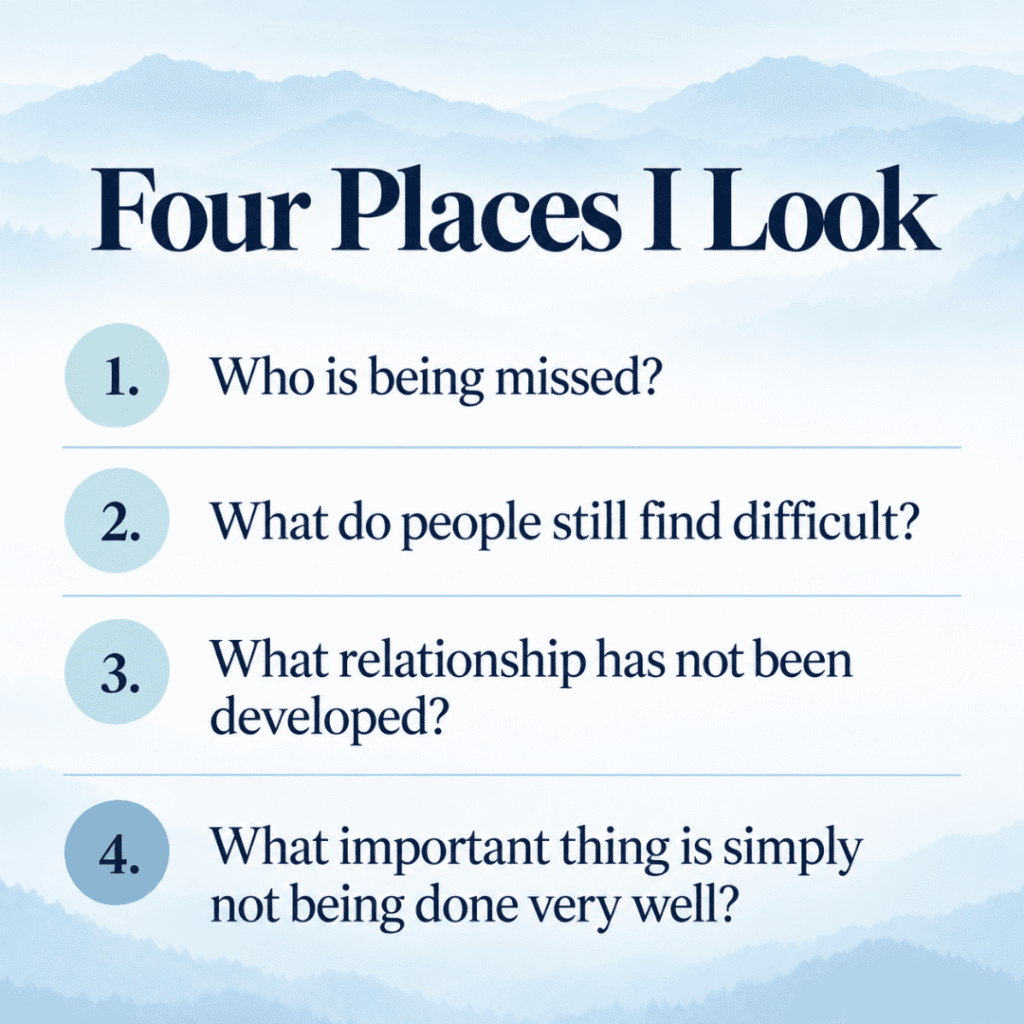
Four Places I Look
I do not usually begin by asking, “What else could we do?” That question can produce an impressive collection of ideas and an exhausting amount of additional work.
I would rather look for a gap. There are four places I tend to look first.
The first is people who are being missed. Who already has a reason to care about what we do, but hasn't developed a deeper connection to the organization? I often begin with the people already around us: board members, volunteers, sponsors, community partners and others who have a natural affinity for the work.
They may know the organization's name or support one part of what we do without ever having experienced the work firsthand. Instead of creating another fundraising event, perhaps the first step is as simple as inviting a small group to the building for a tour, refreshments and a chance to learn more about the services being provided.
A business might look in a similar way at customers, referral sources, professional relationships or others who already have a reason to care but have never been invited into a deeper conversation.
The second is something people still find difficult. What question do we keep hearing? What part of the process seems confusing? What do people have trouble finding or understanding? Sometimes the answer does not require a new program at all. If prospective customers keep asking the same question, two or three sentences on the website may answer it. A short Q&A might explain what happens after the first call, where someone should begin or something about the service people seem reluctant to ask. The gap may simply be that we know the answer and have never made it easy for other people to find.
The third place I look is a relationship that has not been developed. We can spend a great deal of time trying to reach people directly when someone else already knows them and has their trust. A nonprofit may be concentrating on prospective donors while overlooking people in the community who already advise or influence them. A small business may be spending money trying to attract customers one at a time while an organization, employer or related business already has a natural connection to the people it hopes to reach. At this point, I am not trying to build the whole relationship strategy. I simply want to notice the connection and ask whether it is worth exploring.
The fourth is often the easiest to miss because it does not sound particularly new or exciting. I look for something ordinary that almost everyone knows matters but few people consistently do well. Maybe people are waiting too long for a response. Maybe the next step is harder to understand than we realize. Maybe something that once felt personal has become routine. I do not need to solve that problem here. I simply want to notice when an ordinary part of the experience may be creating an opportunity to do something better.
Those four places give me somewhere concrete to begin: Who is being missed? What do people still find difficult? What relationship has not been developed? What important thing is simply not being done very well?
I am not looking for a dozen solutions. I am looking for one gap that matters and one reasonable thing we might be able to do about it.
The Opportunity May Be Neglected, Not New
The phrase do what nobody else is doing can easily be misunderstood. I do not mean organizations should continually search for unusual ideas simply because they are unusual.
New does not automatically mean valuable, and different does not automatically mean strategic.
Sometimes the opportunity is something everyone can see but nobody has paid much attention to. Perhaps several organizations serve the same general audience, but one particular group is rarely invited into the conversation. Perhaps people continue asking the same question because no one has explained the answer very well. Maybe an important connection exists between two groups, but nobody has taken the time to explore it.
The 5% may even be hiding inside something familiar. Two organizations can use the same tool, attend the same event or offer a similar service while paying attention to very different things.
The activity may look the same, but what each organization notices and does with it may be very different.
Then Ask Why You
Finding a gap is only the beginning. An overlooked opportunity is not automatically your opportunity.
That distinction matters because an interesting idea can become a distraction if it has little connection to what the organization or business actually does well.
Once I see a possible opportunity, I want to know why us? What do we already have that makes this worth a closer look?
Maybe we already have trust with the audience. Perhaps we have specialized knowledge other people do not. We may have access to a place, person or resource that makes the opportunity easier to pursue. A small business may be known for highly personal service. A nonprofit may understand a particular community especially well. An independent professional may have experience that allows her to see connections other people miss.
Those things matter because a gap becomes much more interesting when it connects naturally to something we already know how to do.
Take One Opportunity a Little Further
Suppose a service business has spent years marketing to people who already understand the service, but growth has slowed.
As I work through the four questions, one possibility begins to stand out: people who know they have a problem but do not know what kind of help to ask for.
They are being missed because they are not actively searching for the service. What they find difficult is recognizing what their problem means and understanding what kind of help might be available. The business already has the knowledge to explain that problem in a way people can understand.
Now I would stop before turning the idea into a campaign.
Are people really struggling with this?
Is it something the business already knows how to help with?
Do we know enough to be useful here?
If the answers are yes, I would keep looking.
At that point, I still would not say we have proven anything. We have simply found one possibility that seems to matter and fits the business well enough to deserve a closer look. Whether people actually respond to it is a different question, and that comes later.
Finding the 5% Requires Restraint
Once people begin looking differently, possibilities can multiply quickly. One overlooked audience leads to an idea for a new program. One potential relationship suggests a partnership. One unmet need suddenly becomes an event, a campaign and a social media plan.
That is how one crowded calendar becomes another.
Finding the 5% requires restraint. We do not have to pursue every good idea we uncover. I am looking for the one that solves something that matters and makes sense for who we are and what we already know how to do. For me, the questions are fairly simple: What opportunity are we seeing? Why does it matter? And why might we be the right people to do something about it? Those questions help me decide whether I am looking at a real possibility or simply another interesting idea.
“An overlooked opportunity is not automatically your opportunity.”
Small Does Not Mean Unimportant
There can be a temptation to dismiss an opportunity because it does not seem large enough to deserve the word strategy. I think that can cause organizations to overlook something useful.
The 5% does not have to become the largest part of the business, donor base or audience. One overlooked group may become a dependable source of new relationships. One connection may introduce people we would never reach on our own, and one small improvement may make it easier for people to understand what we offer.
A small opportunity can still matter, particularly in a crowded market where a little additional business, participation or support helps keep the pipeline fuller.
The 5% May Be Closer Than You Think
Finding the 5% does not require a retreat, a complicated planning document or a dramatic reinvention of the organization. Sometimes it begins by paying closer attention to what people are telling us, what others are neglecting and what we have become accustomed to overlooking.
It may be found in a person nobody has invited, a relationship nobody has explored, a need people continue struggling with or a simple practice that is not being done particularly well.
The most promising opportunity may not be far outside the market at all. It may be sitting just beyond the place where everyone else has decided to concentrate.
That is why I keep looking for the 5%.
One Thing to Try
Choose one area where the market feels crowded. It might be fundraising, customer acquisition, sponsorships, events or another place where many people seem to be competing for the same audience.
Instead of asking what else you could add, look in four places:

- Who is being missed?
- What do people still find difficult or are not getting very well?
- What relationship has not been developed?
- What important thing is simply not being done very well?
Then choose one possibility and take it a little further. Does it solve something that really matters? Does it connect to something you already do well? And do you have something useful to offer?
You do not need five ideas.
You need just one opportunity that matters, fits what you already do well and deserves a closer look.
That may be your 5%.
Sources & Further Reading
Michael E. Porter's What Is Strategy? distinguishes strategic positioning from operational effectiveness and argues that meaningful strategy requires choices and tradeoffs rather than continual imitation of competitors.
What Is Strategy? — Harvard Business Review
Chan Kim and Renée Mauborgne's Blue Ocean Strategy framework encourages organizations to look beyond current customers toward people and demand outside the part of the market where everyone is already competing.Three Tiers of Noncustomers — Blue Ocean Strategy