
I first knew Myrna Hershberger in the band room at Madison Junior High School. She taught strings, but on occasion she filled in for our band director, Mr. Nordstrom.
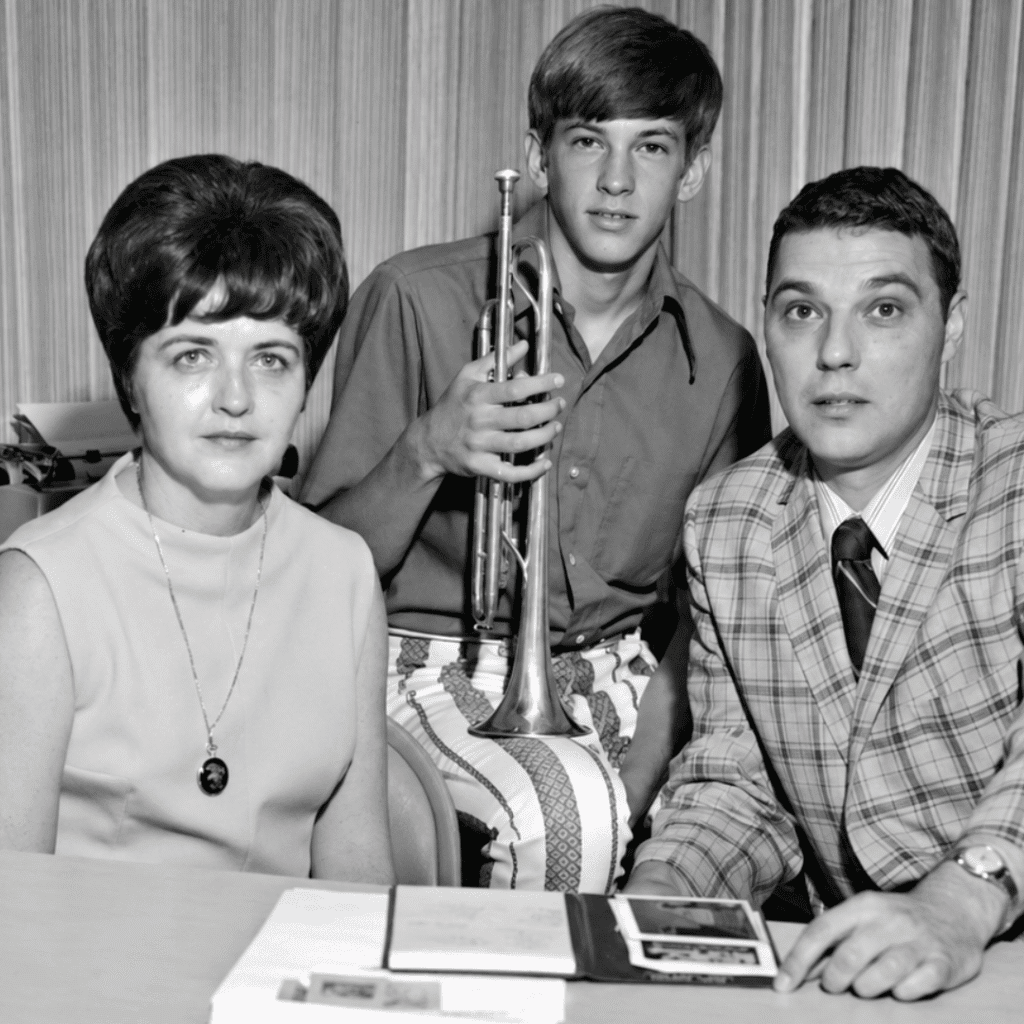
It was a large tiled space lined with acoustic panels, with three or four rows of folding chairs and music stands arranged in a gentle curve. Before rehearsal began, the room had its own kind of noise. Percussion players worked through rolls and rudiments on the snare drum. Brass instruments blew notes up and down the scale. Clarinets squawked through difficult passages, and I contributed my share of those.
Chairs scraped across the tile, pages turned, and everyone seemed to be playing something different. There were familiar smells, too: valve oil and old sheet music that had passed through the hands of who knows how many students.
Mrs. Hershberger would stand behind the blond upright piano at the front of the room, waiting for us to settle down.
The piano is part of what I remember most about her. On days when we finished rehearsal early, she would perch on a metal stool and start playing the music we were listening to outside the band room. Crocodile Rock. Superstition. American Pie. Song Sung Blue. Lean on Me.
For a few minutes, the band room belonged to our music, too.
We loved it. Someone would call out a song, and she would play it. Even the smart alecs would throw out titles of rock songs, perhaps hoping they had finally found something she couldn't play. She would play those, too.
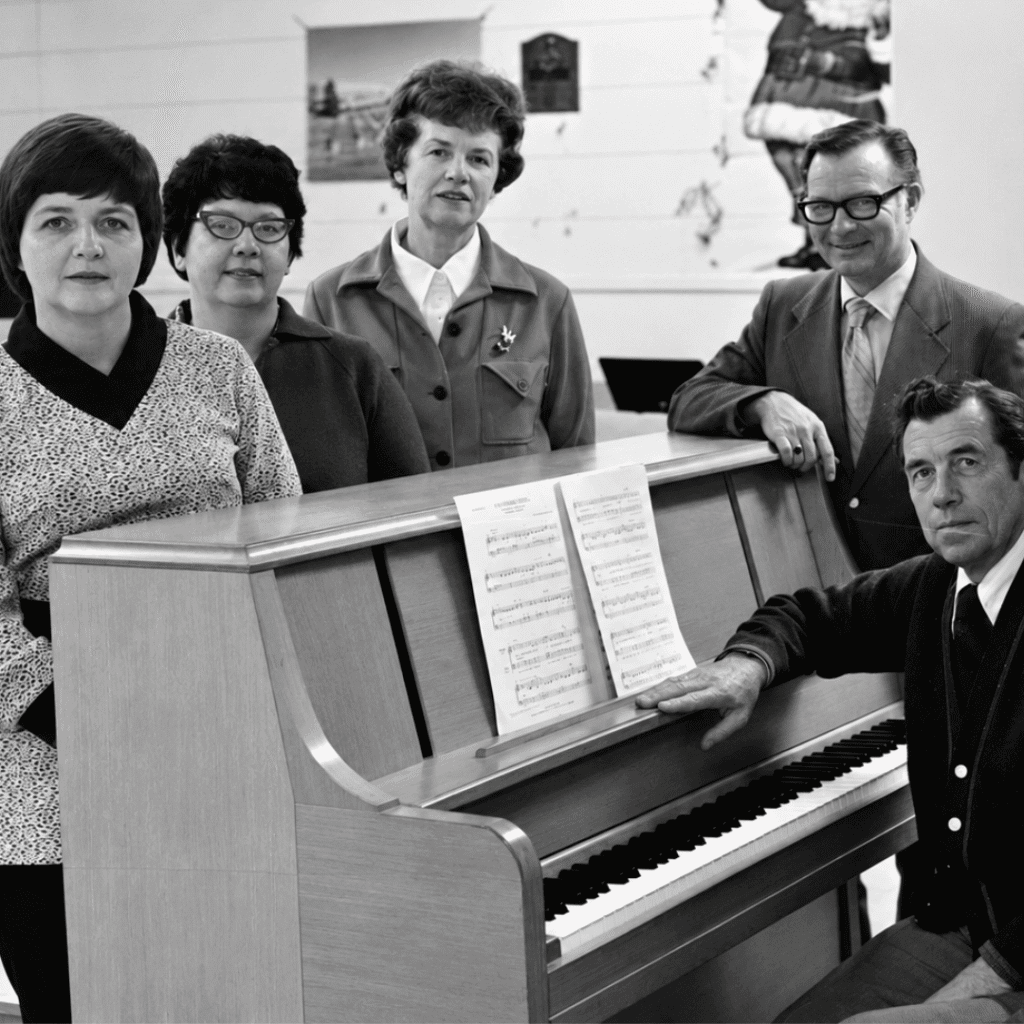
At that age, I don't think I understood how unusual that was. I only knew that she could sit down at that blond upright piano and play almost anything we asked for. To a young music student, it bordered on magic.
Talking with her son, Jay, all these years later helped me understand how she did it.
Myrna had an extraordinary ear almost from the beginning. When she was still a little girl in Chanute, Kansas, her father took her to see Knute Rockne, All American. Afterward, she went home, sat down at the piano and played the Notre Dame fight song she had just heard in the film.
“She had perfect pitch,” Jay told me.
Her parents recognized her ability and made sure she had piano lessons. Myrna could hear something and play it back so easily that when the family later moved to Pittsburg, Kansas, her new piano teacher presented her with a problem. He wouldn't play the music for her. He expected her to read it.
Myrna sometimes came home from those lessons in tears. She knew that if he would just play the piece, she could play it right back. Jay compares it to being sent back to kindergarten and told to learn how to read. But the teacher wouldn't give in, and Myrna learned.
That little girl eventually became an accomplished pianist. She studied at Pittsburg State before transferring to Wichita State University, where she earned a degree in music education with piano as her primary instrument. As a senior, she won Wichita State's concerto competition and performed Ravel's Piano Concerto in G Major with the orchestra. Her senior recital included Chopin's Ballade No. 1 in G Minor.
Knowing that now helps me understand something about the woman I remember sitting at that blond upright piano. Jay remembers the same thing I do: a pianist who could move from serious classical repertoire to the popular music people wanted to hear.
The Pianist Who Taught Orchestra
There was something else I didn't appreciate when Mrs. Hershberger was standing in for Mr. Nordstrom. The woman I knew as a strings teacher was actually a pianist.
Myrna moved to Bartlesville with Jay and his sister, Julie, in 1970. As a single mother raising two children, she initially worked as a substitute teacher. When an orchestra teaching position became available, she took it.
Her music education degree had included string methods. I took string methods myself in college. The idea is to learn the mechanics of an instrument outside your primary area and enough about playing it to teach the fundamentals.
It does not turn a pianist into a concert violinist.
Myrna apparently had a sense of humor about that. Jay remembers her joking, “I don’t know how to play Come to Jesus in whole notes, but I know how to get them to do it.”
I laughed when he told me that. I can hear the humor in the line, but I also recognize the teacher behind it. Mrs. Hershberger didn't need to be the finest violinist in the room. She needed to hear when something wasn't right and know how to help a young musician make it better.
She was very good at that.
Jay remembers an accreditation team coming to observe her classroom during the years when outcome-based education had become a major emphasis in public schools. Observers normally spent about half an hour in a classroom. They stayed in Myrna's room about five minutes.
“We don't need to watch anymore,” Jay remembers them saying. “She's already doing it.”
Her junior-high orchestras consistently earned top ratings at state contests. She became Bartlesville's Teacher of the Year in 1987 and was one of four finalists for Oklahoma Teacher of the Year. But when Jay talks about his mother's approach to teaching, he makes it sound much simpler.
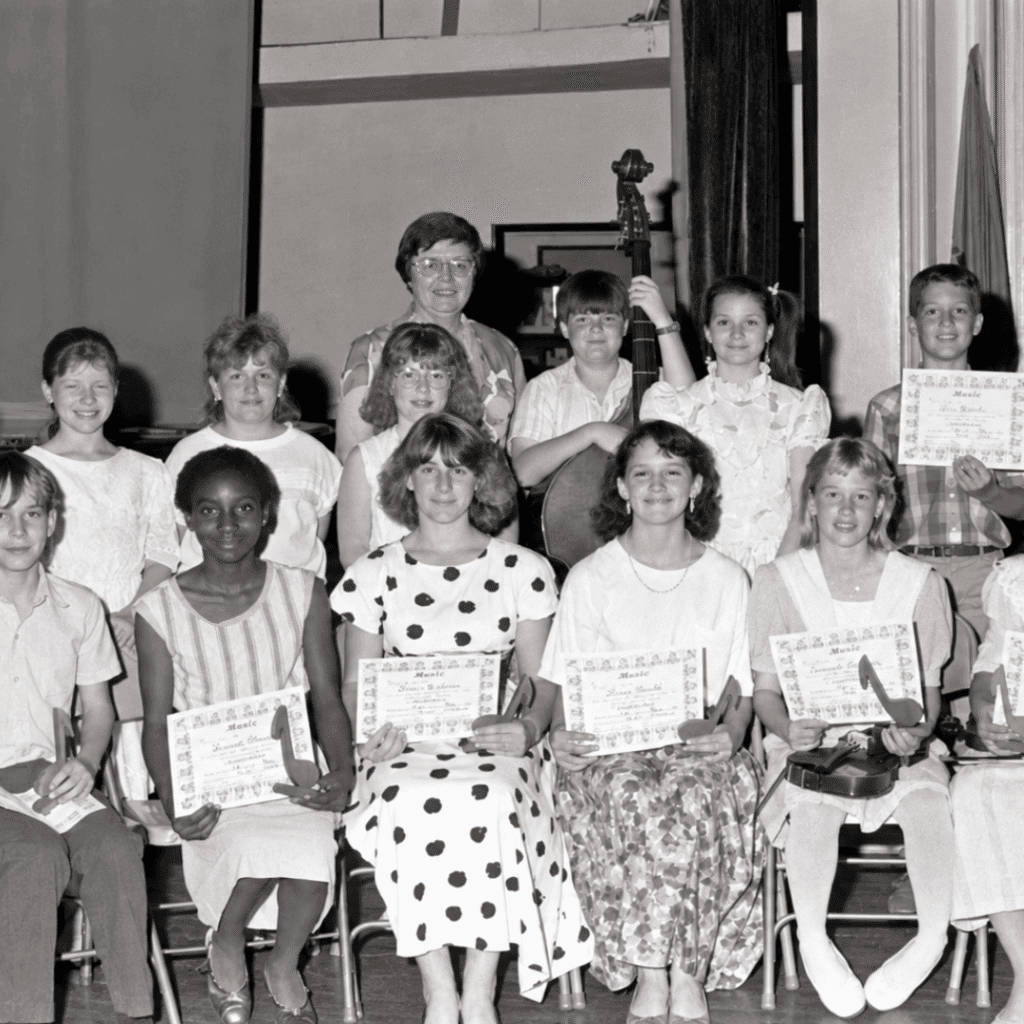
“Because that's what music is,” he said. “You put your finger there until you have it right.”
Music at Home
Mrs. Hershberger's students weren't the only young musicians expected to keep working until they got it right. Jay and Julie grew up with music woven into the rhythm of their home.
Jay remembers practicing from 6:00 to 6:30 in the morning before school. Julie followed from 6:30 to 7:00, and there was more practice after school. Once, Jay was practicing a particularly harsh and dissonant piece when his mother told him, “Don't practice that piece until I've had a cup of coffee. Practice something else.”
There was humor in that, too. But there was no suggestion that he was getting out of practicing.
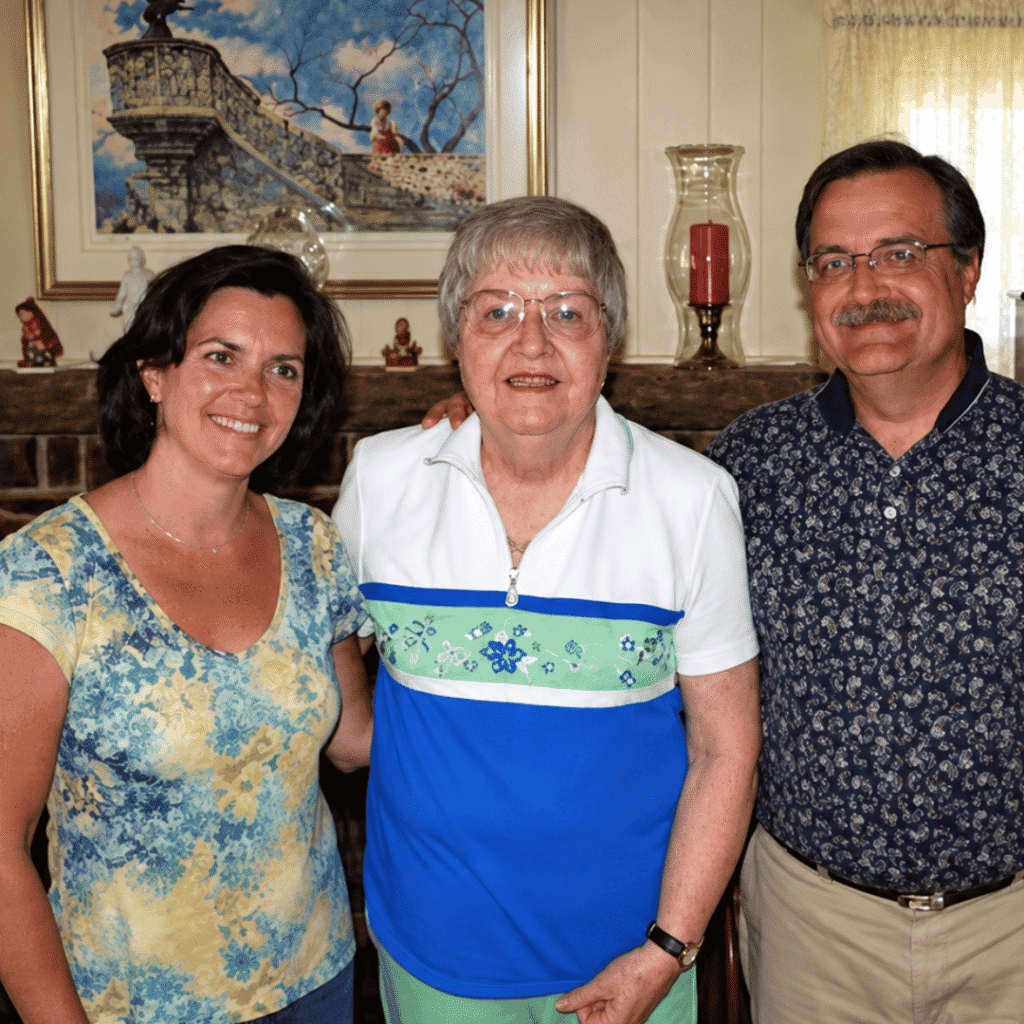
When her children needed instruction beyond what was available locally, Myrna drove them to Tulsa for lessons. Jay remembers the things his mother did without so they could have those opportunities. “She poured her life into my sister and me, encouraging us to achieve and do well,” he said. “She sacrificed so much for Julie and me. She always was there for us.”
And just as I remember hearing Myrna play the music we loved, Jay remembers hearing his mother play the music that would eventually become part of his own story.
He heard her practicing Rachmaninoff's Piano Concerto No. 2 at home, a sweeping work for solo piano and full orchestra. In 1979, when he was a high-school senior preparing for the Bartlesville Symphony Orchestra's student competition, he chose the concerto's lyrical second movement, Adagio sostenuto. Even readers who don't know the concerto may recognize its melody. Eric Carmen drew from the second movement when he wrote his 1975 hit, All By Myself.
“What inspired me to learn the Rachmaninoff No. 2 was hearing her play it and practicing it,” Jay told me.
Jay became one of the competition winners that year and performed with the Symphony. He eventually chose a life in music himself, although that decision gave his mother some pause.
He entered college as a double major in music education and piano performance, but he knew he didn't want to become a public-school music teacher. He wanted to be a pianist. Myrna, who understood something about the uncertainty of a performing career, wanted him to have something to fall back on.
“Mom, I'm not going to be a public-school teacher,” Jay told her. “I want to be a pianist. I'll sell insurance if I have to.”
Her answer was simple: “OK. Go for it. Don't look back.”
Jay did just that, building a long career as a concert pianist and professor at Concordia College. When I asked him where he sees his mother in himself, he didn't talk about perfect pitch or musical ability.
“Uncompromising commitment to excellence,” he said.
The Myrna I Didn't Know
Myrna continued working with young musicians several years after she retired from public-school teaching. She accompanied students and helped them prepare for competitions, including the Bartlesville Symphony Orchestra's Young Artists Competition.
“She was a good coach and knew how to move them along,” Jay told me. “She had a real passion for getting them to do their best.”
I knew that part of Mrs. Hershberger.
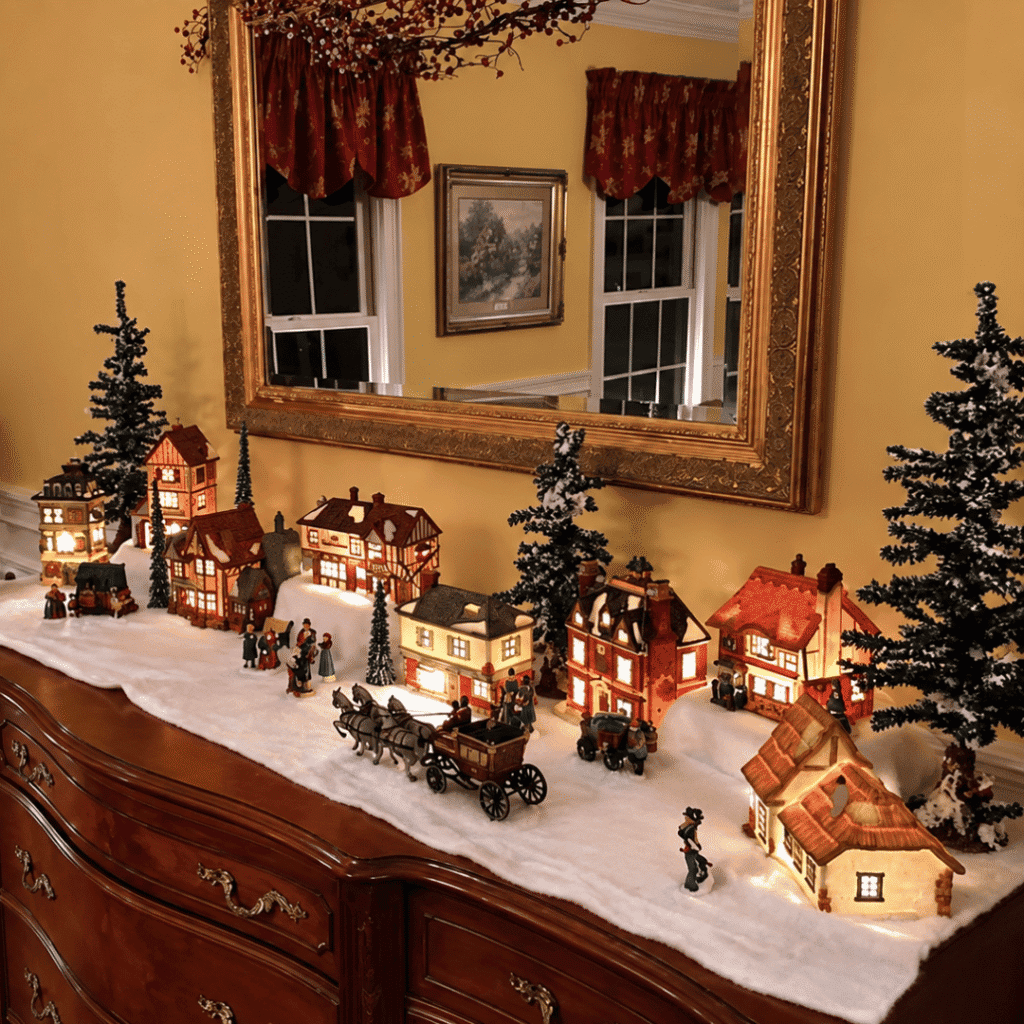
What I didn't know were some of the other things Jay told me about his mother. Myrna square danced and even participated in competitions. She crocheted afghans for her family, including ones Jay and Julie still have. She collected Charles Dickens’ Christmas village houses, a collection her children inherited and have continued as a family tradition.
I like knowing those things about her. As students, we tend to know teachers only within the boundaries of the places where they teach us. Mrs. Hershberger belonged to the band room, standing behind that blond upright piano waiting for us to settle down. I never thought about the woman who went home at the end of the day.
When Myrna died in 2012, the Bartlesville Symphony Orchestra named its Young Artists Competition in her honor. There is something especially fitting about that. Jay had been one of its early winners in 1979 as a pianist. Julie won in 1981 as a vocalist. Years later, their mother was still helping other young musicians prepare for the same opportunity.
Today, when Jay posts something about his mom on Facebook, former students still respond. They remember her. So do I.
But now I know a little more.
I know about the little girl who could come home from a movie and play a song she had heard only once. I know about the piano teacher who wouldn't let that talented little girl rely only on her ear. I know about the mother who sent one child to the piano at 6:00 in the morning and the other at 6:30, then drove them to Tulsa when they needed more than she could give them herself. And I know about the woman who square danced, crocheted afghans and built a Dickens village at Christmas.
All of that gives me a different picture of the woman I remember standing behind that blond upright piano.
And I still smile at the line Jay shared with me. Myrna joked that she couldn't play Come to Jesus in whole notes, but she knew how to get her students to do it.
She certainly did.
She knew how to get us there.
Take Myrna's Story With You
Download the Reader's Edition of She Knew How to Get Them There to read later or share with someone who remembers Mrs. Hershberger. Download the Reader’s Edition
About Myrna Hershberger
Myrna Hershberger (1936–2012) was a pianist and longtime Bartlesville music educator who taught elementary and middle-school strings until her retirement in 2001. Her musical life extended throughout the community, including Strolling Strings, Keys for Concern and Bartlesville Symphony Pops concerts. She continued accompanying and coaching young musicians after retirement, and in 2012, the Bartlesville Symphony Orchestra named its Young Artists Competition in her honor.
School photographs courtesy of the Bartlesville Public Schools Photo Archives, Bartlesville, Oklahoma. Personal photographs courtesy of Dr. Jay Hershberger.
About This Story
This story draws from Angie Thompson's memories of Myrna Hershberger and an interview with Myrna's son, concert pianist and Concordia College professor Dr. Jay Hershberger, who shared stories about his mother's life, music, teaching and family.
About the Writer
Angie Thompson is a fundraising strategist, storyteller and consultant who believes words and images can spark transformation. For more than 40 years, her work has spanned education, business, film, music and philanthropy, earning recognition for her work in sound design, composition and storytelling.
Through her Women Who Say Yes to the Spark series, Angie explores the stories behind the women we know, discovering the interests, experiences and unexpected turns that have influenced their lives, their work and the communities around them..