
How a teacher, a watercolor brush, and the courage to say yes led Amy Jenkins to a gallery filled with light.
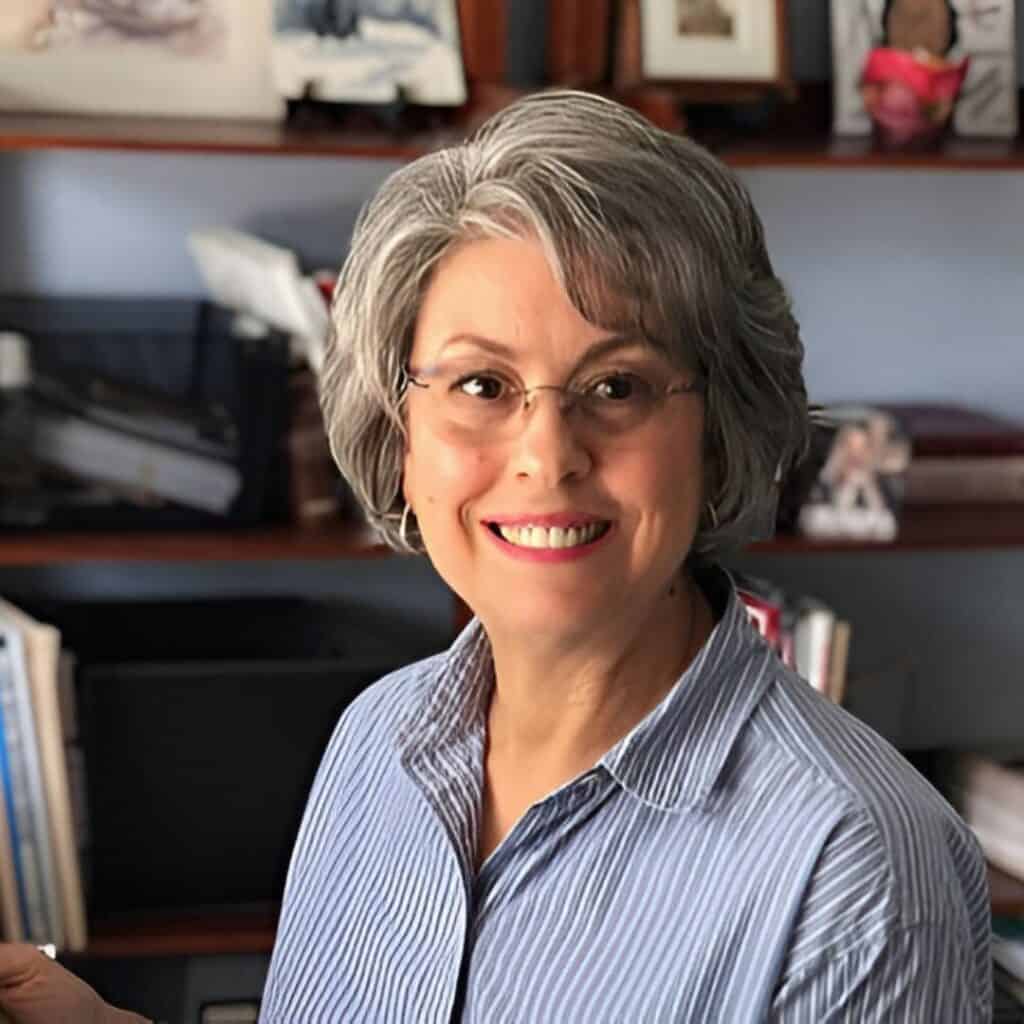
Amy Jenkins stood inside the Lyon Gallery surrounded by paintings that had once existed only as ideas in her mind.
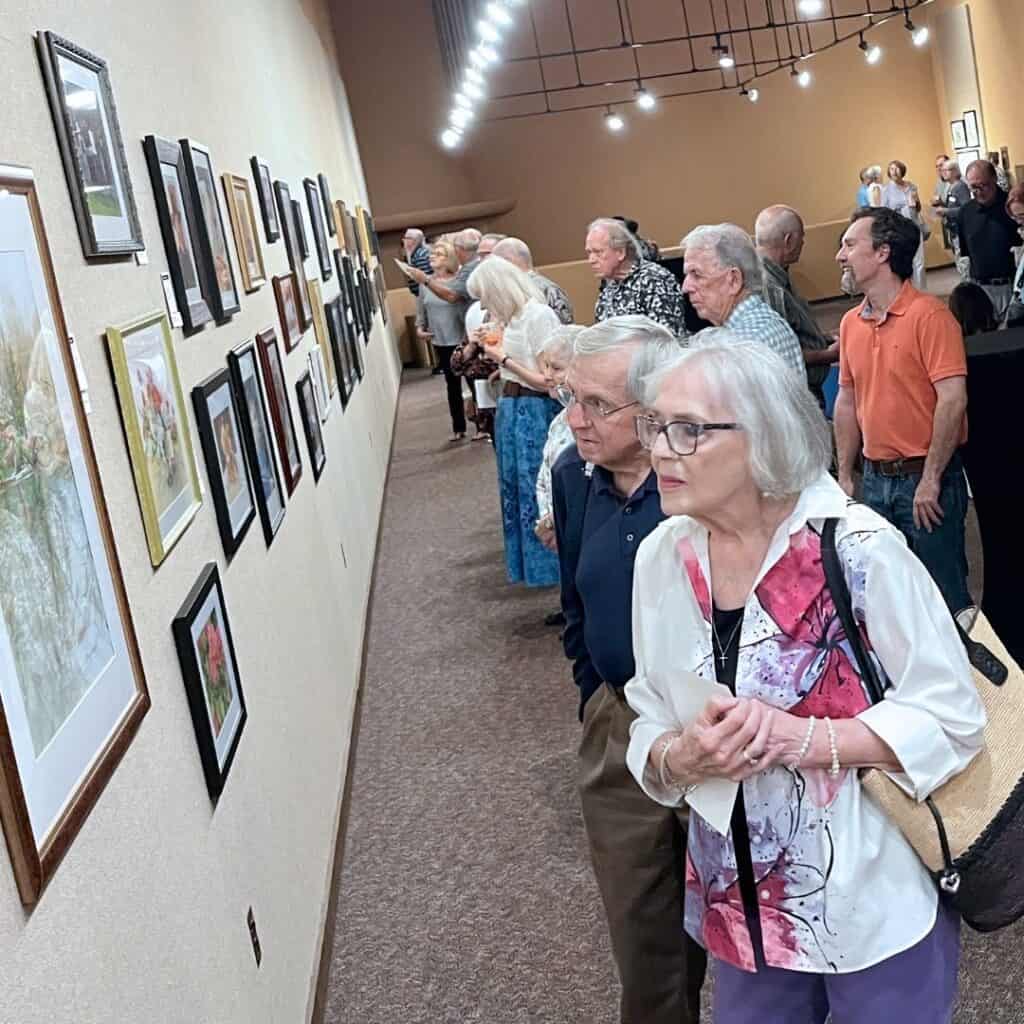
Gallery lights beamed down onto rows of watercolor paintings arranged across the long carpeted room. Landscapes, travel scenes, and reflections on water stretched across the walls in soft layers of color and light. Her work was grouped by themes that reflected years of study and observation, including Oklahoma, Texas, Maine, international travel, and scenes of people and places she had photographed over time.
For the first time, she could see them all together, not as individual paintings, but as a complete body of work. It was the first time she fully understood how much she had created.
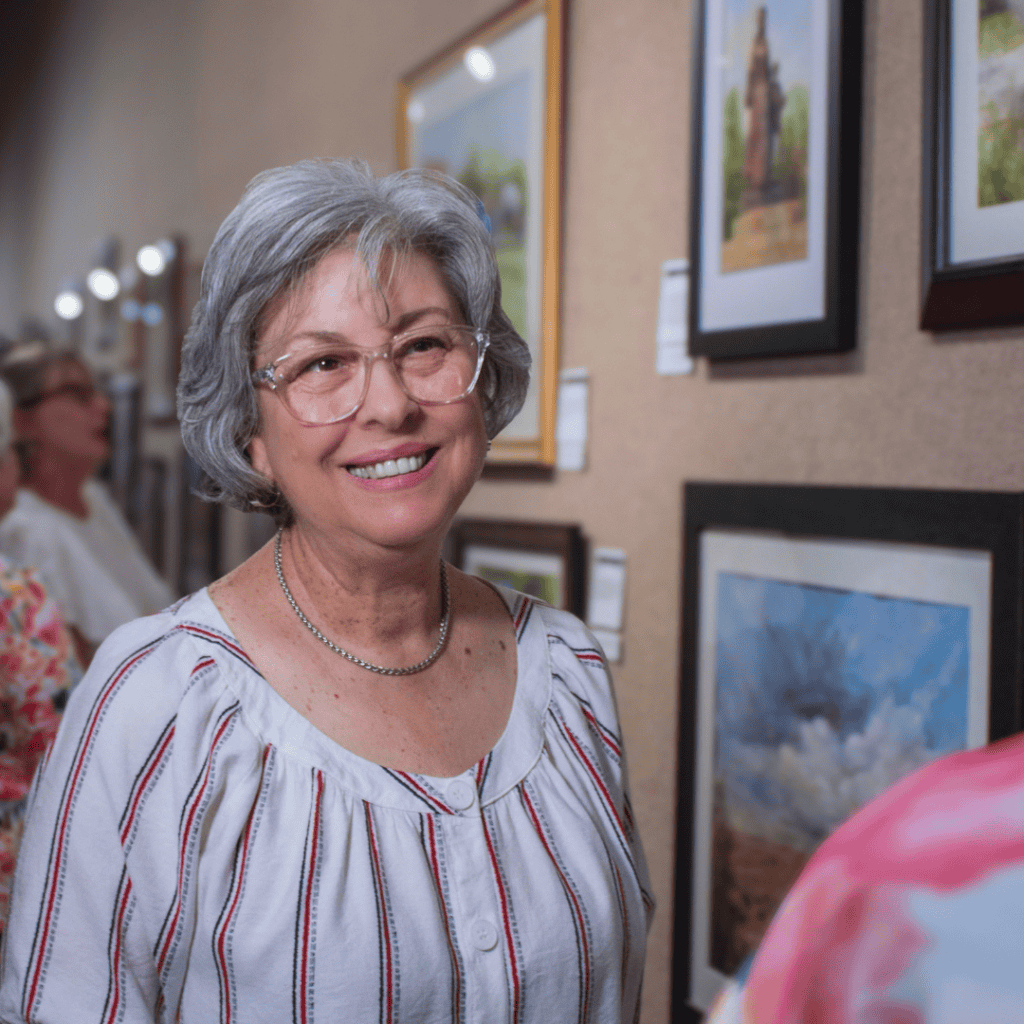
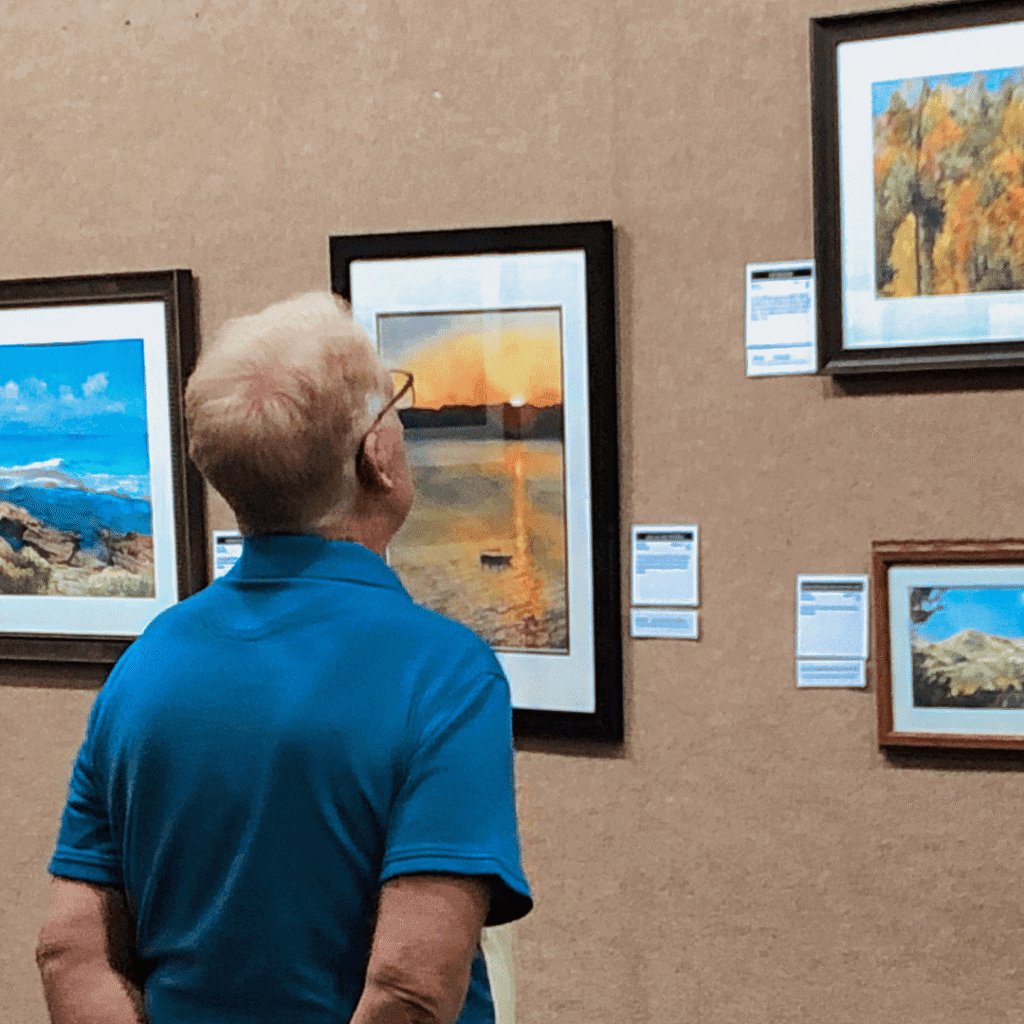
Guests moved slowly through the room, leaning in to study the brushwork and layered transparency of watercolor. Every so often, someone lifted the small tag beside a painting, quietly claiming their treasure. In the middle of the room, Amy’s two-year-old granddaughter ran excitedly between guests and paintings, weaving through the space with curiosity and energy.
One question surfaced again and again that night.
“How did she do that?”
Each painting represented hours of observation, planning, and careful brushwork. Together they reflected years of steady work, brushstroke by brushstroke, painting by painting. Just a few years earlier, she would have hesitated to imagine something like this.
Yet the story that led to these gallery walls did not begin with exhibitions or awards. It began decades earlier in a junior-high classroom in St. Petersburg, Florida.
When the Light Switch Turned On
Amy remembers that classroom clearly. It was an open room filled with young teenagers working at large tables, the air carrying the familiar scent of art paper, paint, and clay. It could be loud at times, with students talking and laughing, but the environment felt relaxed and welcoming. Jars of cloudy paint water sat on the tables while students compared their work, and the teacher moved from group to group offering encouragement.
One assignment involved crafting a bird from clay.
“I didn’t think it was anything special,” Amy laughs. “But my teacher bragged on my skills and encouraged me to explore art.”
Every project seemed to draw her in. Whether the assignment involved painting, sketching, lettering, printmaking, or clay, she found herself completely absorbed in the process.
“It didn’t matter what the project was, it was like a light switch turned on,” she remembers. “I loved all of the projects.”
Before that moment, Amy had never experienced something that felt deeply personal or completely her own. Art held her attention in a way nothing else had.
One day the class began carving designs into printing blocks. Amy carved two blocks to create an overlay design. One block formed the dragon’s body, and the other its wings and flames. Each block was inked in a different color, and when she pressed them onto the paper, the image appeared in layers just as she had envisioned.
She still remembers the moment the two separate images became one.
“I remember thinking how cool it was,” she said.
Her teacher noticed something as well. After studying Amy’s work, she encouraged her to consider studying art more seriously. Amy did not realize it at the time, but that encouragement would stay with her and quietly shape the direction of her life.
Carrying Creativity Into Life and Work
Amy went on to study art formally and later worked as a commercial artist before eventually making her way to Bartlesville, where she spent years teaching elementary art. In the classroom, she began to recognize the same spark in her students.
“I can’t see what is happening internally,” she said, “but I can see it in their smiles and in their eyes.”
Watching her students discover creativity often brought her back to her own experience. The moment when someone realizes they can create something meaningful produces a visible shift, one that is subtle but unmistakable. That moment, she believes, can happen at any age.
Today she continues to witness that transformation through the watercolor classes she teaches at the Bartlesville Art Association. Her classes bring together adults from many backgrounds, some of whom have not picked up a paintbrush in decades. Many arrive unsure of their abilities, but as the class progresses, something begins to change.
“I see that same moment happening with adults,” Amy said. “You can see it in their eyes when they realize they can do it.”
One student in her eighties described the change in simple words.
“You opened up a new world for me,” she told Amy. “Instead of being bored and sitting at home, you’ve given me something that keeps me going.” Moments like that continue to reinforce something Amy has come to understand deeply. When people create, they step away from stress, pressure, and the constant demands of daily life. In that space, something shifts, and creativity becomes both an outlet and a source of renewal.
A New Chapter
For many years, Amy devoted her creative energy to helping others discover their own artistic abilities. Lesson plans, classroom projects, and encouragement filled her days. But after retiring from teaching in 2014, a new question began to take shape.
For the first time in years, she wondered what might happen if she devoted that same energy to her own work.
Discovering Watercolor
Her sister invited her to attend a watercolor class in North Carolina, and Amy agreed. She arrived with the wrong supplies, including student-grade paints, the wrong paper, and brushes that were not suited to the medium. But the class introduced her to something that immediately captured her attention.
Watercolor behaves differently from other forms of paint. Color moves through water and settles into the paper in translucent layers that allow light to pass through. Edges soften and blend in ways that feel both controlled and responsive.
“I remember the medium felt so fresh and transparent,” she said. “The way the brush strokes moved on the paper felt alive.”
Watercolor allowed light itself to become part of the image, and that quality drew her in.
“That transparency brings the image to life,” she said.
The medium also demands careful planning and patience. Once a brushstroke is placed, it cannot easily be changed, which means each decision matters. That combination of structure and unpredictability fascinated her.
“I just wanted to see how good I could get with watercolor,” she said. What began as curiosity gradually became discipline as Amy studied techniques, experimented with materials, and learned from artists who had spent decades mastering the medium.
The Painting That Revealed Something More
One of Amy’s early watercolor paintings came from a trip to Israel. During a visit to the Sea of Galilee, she woke early one morning and stepped onto the balcony of her hotel room. A warm breeze moved across the water, and in the distance she could hear the quiet sounds of the city beginning to wake. Somewhere below, the smell of breakfast drifted through the air as the sky slowly began to change color.
Amy began photographing the changing light as the sun rose over the water. The colors shifted from cool blues to soft gold, and the reflection stretched across the surface in a way that caught her attention immediately.
Back home, she began translating that moment into watercolor. The painting required patience as she studied how to capture the reflections, balance the foreground and distance, and allow light to emerge through layered color.
“I wasn’t as sure of myself then,” she said.
Eventually, she entered the painting in a regional exhibition, where it received an award. Years later, that same painting appeared again in her Lyon Gallery exhibition, where a visitor stood before it with tears in her eyes before purchasing it. That moment changed how Amy saw her work.
The Courage to Exhibit
Despite years of painting, Amy hesitated when the idea of organizing a solo exhibition first entered her mind. She enjoyed painting and studying watercolor, but the idea of filling an entire gallery with her work felt overwhelming.
“I’m afraid of everything,” she said with a laugh.
The idea might have remained in the background if not for a conversation with one of her mentors. When Amy told him she had been accepted into the Watercolor USA exhibition, he congratulated her and offered a simple piece of advice.
“The next step is to have a solo show.”
The suggestion stayed with her. Months passed before she gathered the courage to approach the Lyon Gallery. When she finally sat down with the gallery staff, the curator asked a simple question.
“What would you like to call the show?”
Amy had not planned an answer, but the words came immediately.
“Bartlesville and Beyond.”
In that moment, the exhibition became real. Saying yes changed everything. The work was no longer just practice. It was becoming a life’s work.
When Opportunity Follows Courage
Once the exhibition was scheduled, Amy spent the next year painting and preparing a body of work that would fill the gallery walls. Some days the work came easily, and other days required patience and persistence, but she continued building the collection piece by piece.
When the opening reception arrived, visitors responded enthusiastically. They studied the paintings carefully, asked questions about her process, and many wanted to understand how watercolor worked and how long each piece required.
Amy sold eleven paintings during the show, along with prints and cards. More importantly, the exhibition changed how others viewed her work and her commitment to the craft. Not long after the exhibition, she was invited to share her work as a guest artist at a cooperative gallery in Oklahoma City. The solo show that once felt intimidating had become a doorway to new opportunities.
Creating Peace Through Art
Today Amy continues to paint, teach, exhibit, and encourage others to explore their creativity. Over time, she began hearing a similar response from people who experienced her work.
“They say they feel peace,” she said.
That response has become deeply meaningful to her. Her paintings are more than images of landscapes and reflections on water. They have become a way to communicate something deeper, a reminder that beauty still exists and that it can still be felt.
Back at the Lyon Gallery that evening, visitors continued moving from painting to painting, studying the reflections, the colors, and the layered transparency of watercolor. Amy watched them engage with work she had spent years learning to create.
Sometimes a single painting can open a door.
And sometimes a single moment of creativity can change a life.
For Amy Jenkins, that moment came as a happy surprise. And now she helps others discover it, too.
This blog contains the full story. Download Amy's Abbreviated story.
About the Artist – Amy Jenkins
Amy Jenkins is a watercolor artist based in Bartlesville, Oklahoma. After careers as a commercial artist, calligrapher, and elementary art teacher, she now focuses on watercolor painting and teaching adult art classes. Her work has been juried into regional and national exhibitions including Watercolor USA and the Southwestern Watercolor Society Annual Exhibition. She draws inspiration from travel, landscapes, and the familiar scenery of the southern Midwest, and is known for watercolor paintings that emphasize light, color, and a sense of peace. Amy is a member of the Bartlesville Art Association, and past president.
About the Writer – Angie Thompson
Angie Thompson is a fundraising strategist, storyteller, and consultant who believes stories have the power to connect people and inspire action. Through her work with nonprofits, artists, and community organizations, she helps individuals and organizations communicate their mission through meaningful stories and clear messaging. Her background includes work in music, film, nonprofit development, and brand storytelling. She is the creator of the Women Who Say Yes to The Spark storytelling series, which highlights women whose creativity, leadership, and courage have influenced their communities and the people around them. Angie also worked with Amy Jenkins as publicist for her solo exhibition in 2025.
Disclaimer
The narrative presented in this story is based on personal interviews and reflections of Amy Jenkins. The views and memories shared are her own and are included with permission. This feature is part of the Women Who Say Yes to The Spark series.